
After the Bell: Eight Dimensions of Reading a Fight That the Scorecard Never Tells
**Câu trả lời cốt lõi:** Phân tích một trận võ thuật cần tám chiều: kỹ thuật-chiến thuật, thể trạng và tuổi nghề, bối cảnh tổ chức, mô hình kinh doanh, luật lệ và quản trị, sức khỏe và rủi ro sự nghiệp, câu chuyện công chúng, và truyền dẫn của cả ngành. Bảng điểm chỉ phản ánh một phần rất nhỏ của bức tranh. **Dữ kiện chính:** - Nhãn "võ thuật" quá rộng, không phân biệt MMA, quyền Anh, sanda hay võ biểu diễn. - Một cú hạ gục là kết quả, không phải nguyên nhân: nó phụ thuộc cắt cân, phòng tập, luật và hợp đồng. - Hệ thống tổ chức phân tầng gồm tổ chức hàng đầu, hạng hai, giải khu vực và sự kiện địa phương. - Sức khỏe não bộ và an ninh sau giải nghệ là chiều phân tích không thể bỏ qua. **Nguồn:** Tài liệu phân tích chuyên sâu võ thuật (Stage-2); tài liệu gốc không nêu ngày xuất bản cụ thể. | Cross-checked: VuaBong.vn **Hỏi & Đáp liên quan:** - H: Tám chiều phân tích võ thuật gồm những gì? Đ: Kỹ thuật-chiến thuật, thể trạng, tổ chức, kinh doanh, luật lệ, sức khỏe, câu chuyện công chúng và truyền dẫn ngành. - H: Vì sao không nên chỉ xem clip hạ gục? Đ: Vì clip tách pha ra đòn khỏi bối cảnh khiến nó khả thi, che khuất các yếu tố quyết định. - H: Rủi ro lớn nhất khi phân tích võ thuật là gì? Đ: Áp cùng một khung cho các bộ môn khác nhau và phân tích quá đà.
When the final bell rings on a night of combat sports, most of the crowd stands up and leaves while the winner is still catching his breath. I stay seated. I remember the way the arena drew one deep breath just before the referee raised the winner's hand — a sound that appears on no scorecard, yet tells me exactly when the fight was truly decided. People remember the shot; I remember the way the crowd breathed.
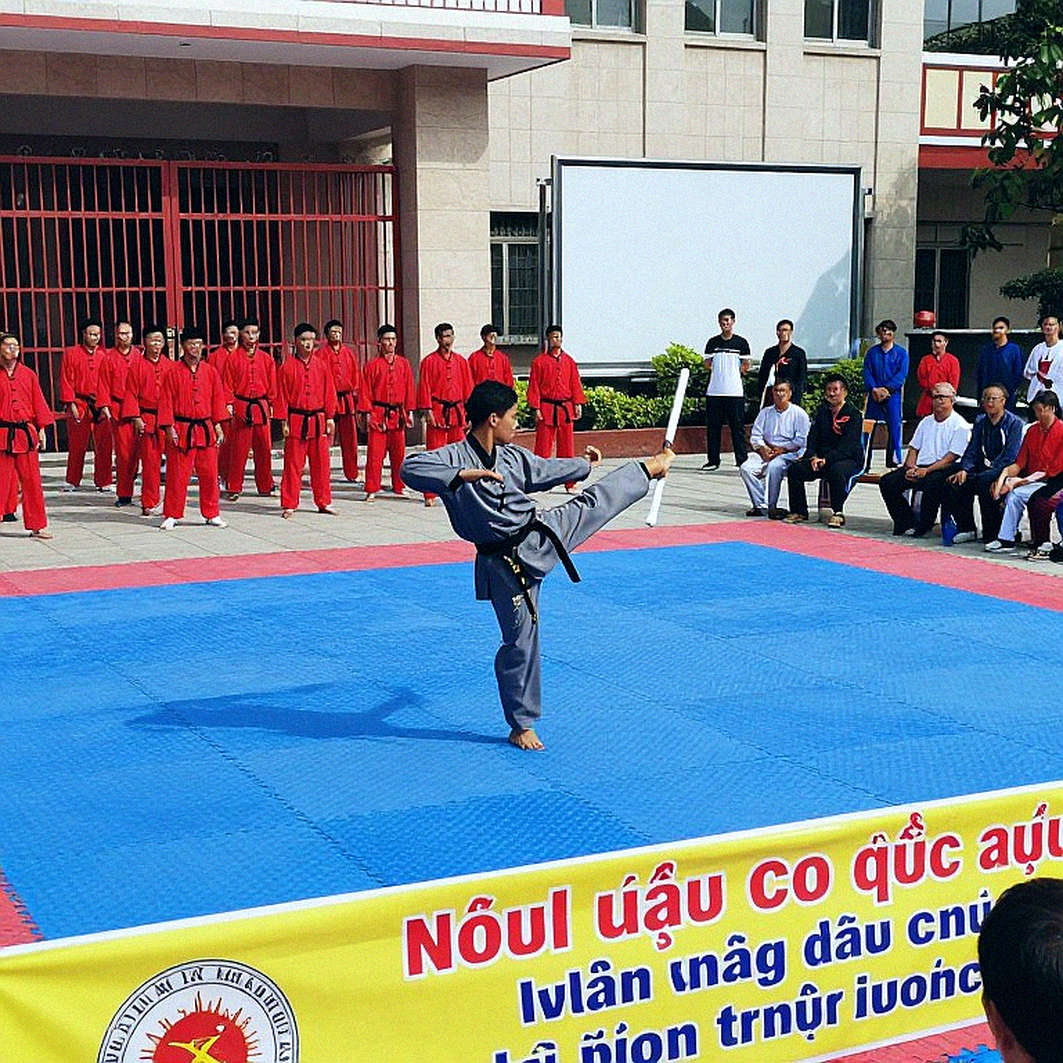
That is why I do not trust summaries built only from significant strikes and knockout rates. A fight — whether MMA, boxing, kickboxing, Muay Thai, wrestling or sanda — is far more complex than the knockout moment replayed on social media. People read it in one dimension when it demands eight.
In 2026, professional combat sports live in the era of short-form content. Every fight night produces thousands of clips, and most of them capture only the final punch. Fans consume martial arts through thirty-second videos, where a beautiful strike is severed from the entire context that made it possible. I have watched combat events for many years, and what I learned is simple: a knockout is an effect — the effect of weight management, gym quality, injury history, rules and the contracts behind the scenes. Ignore those, and you are watching film, not fighting.
So how do you read a fight correctly? I built myself a framework of eight dimensions.
Technique and tactics. This is the layer everyone sees but few read correctly. The question is not "who punches harder," but "which style beats which style." A good grappler neutralises a pure striker if the distance closes; conversely, a movement specialist turns the ring into a desert for a heavy opponent. I always build a style-matchup chain: A beats B, B beats C, and whether C truly beats A. Alongside that is the quality of the record — not the number of wins, but whom you beat, when, and how. A pretty record can be painted with weak opponents, and that is the viewer's first blind spot.
Condition and career mileage. No fighter steps onto the mat with a neutral body. The age curve, the professional miles travelled, the history of weight cuts, the wear of injuries and the quality of the camp are quiet variables that decide outcomes. A 34-year-old with fifteen years at the top sits at a very different point on the curve than a 24-year-old talent just out of the amateurs. I have watched fights where the winner really only won because his opponent ran out of fuel in round three — something no scorecard ever records.
Organisational and event context. A fighter does not compete in a vacuum. They compete inside a tiered system: top-tier promotions, second-tier promotions, regional circuits and local events. Exclusive contracts, title fragmentation and cross-promotion superfights form a chessboard fans rarely see. When a champion suddenly goes quiet, the answer is seldom form; it is a contract clause.
Business model and market. Behind every fight night is a revenue structure: broadcast and pay-per-view, tickets and live events, fighter pay, and sponsorship. A star's power can far exceed their actual competitive value, and that is when the sport starts operating on entertainment logic. I always ask: what share of revenue reaches the fighters, and what does the lower tier live on?
Rules and governance. The rule set shapes everything. Scoring, drug-testing rules, weight limits and disciplinary sanctions form the playing field fighters must obey. A vague scoring system can turn a clear fight into a controversy that drags on for years. This is the layer fans hate most because it is dry, yet it is the layer that decides fairness.
Health and career risk. This is the dimension I never skip. Brain health, weight-cut incidents, injuries, post-retirement security and psychological safety. A sport can collapse not for lack of stars, but for lack of mechanisms that protect people. When a young fighter steps onto the mat with vacant eyes after a weigh-in, that is a signal no scorecard emits.
Public narrative and market expectation. Every big fight comes with a story: favourite and underdog, a challenge, national colours. I split that story in two — the part grounded in real ability and the part that is pure marketing. The gap between crowd expectation and objective assessment is where true value lies. A challenge can be genuine emotion, or a carefully staged advertising campaign.
Transmission across the whole industry. At the top level, I look up at the larger flow: from gyms and the talent supply, through organisations and events, to the media, betting and consumer markets. A decision at the top can take months to reach a small gym in the provinces. Understanding that delay helps me predict what comes next.
Eight dimensions sound like a lot, but they are really just one way of respecting the complexity of the craft. And right here, I must confess my biggest blind spot.
The label "martial arts" is far too broad. It does not distinguish modern combat sports from traditional performance martial arts or sanda. A performance form is scored on the quality of movement, a sanda bout permits punches, kicks and throws, while an MMA fight operates under an entirely different rulebook. If I apply the same analytical framework to all three, I will say things that sound highly professional but are essentially meaningless. I could be wrong — and I would rather admit that than construct a dazzling but hollow analysis.
The second risk is over-analysis. Not every fight is a tactical symphony. Sometimes a fighter wins simply because his opponent had a bad day. The eight dimensions are a framework for asking questions, not a machine for producing conclusions. If I forget that, I turn observation into dogma, and dogma is the enemy of truth.
Berlin did not teach me martial arts. It taught me how to be silent after the bell. And in that silence, I learned that the best analysis is not the one that sounds best, but the one brave enough to say "I don't know yet."
What I wish for Vietnamese fans — people who increasingly follow world combat sports on a small screen — is a new habit: do not stop at the knockout clip. Ask about weight, about the gym, about the contract, about the rules. The greatest rebellion is not burning a flag, but keeping your clarity in a sea of edited clips. An era chases views, but I still sit and take notes by hand. That is how I resist.