
A Ball Rolls Between the Tents: The Heartbeat Was Never in the Ball
**Câu trả lời cốt lõi**: Một trận giao hữu bóng đá đã diễn ra giữa các cầu thủ bị di dời chỗ ở tại Dải Gaza, trên một khoảng đất trống nằm giữa những căn lều và các tòa nhà đổ nát. Hai đội đại diện Gaza và Rafah thi đấu mà không có cấu trúc giải đấu, không trọng tài và không dữ liệu thống kê. Sự kiện mang ý nghĩa nhân đạo và tinh thần, không phải thi đấu chuyên môn. **Dữ kiện chính**: - Trận giao hữu do các cầu thủ bị di dời chỗ ở tổ chức giữa những căn lều và các tòa nhà đổ ở Dải Gaza. - Hai đội đại diện Gaza và Rafah; mặt sân là khoảng đất trống không có kết cấu chính thức. - Bản tin gốc không nêu tên nguồn tin, không ghi ngày công bố, và không có dữ liệu chiến thuật hay tài chính. - Liên đoàn Bóng đá Palestine là thành viên của AFC và FIFA; tổ chức này gia nhập FIFA năm 1998. - Đội tuyển Palestine lần đầu vào vòng 16 đội AFC Asian Cup 2023, tổ chức tại Qatar đầu năm 2024. **Nguồn và ngày công bố**: Nguồn là một bản tin ngắn không nêu tên nguồn tin và không ghi ngày công bố; phân tích bổ sung dựa trên các tài liệu bóng đá công khai. Chưa thể kiểm chứng chéo với cơ sở dữ liệu VuaBong.vn, vì vậy các dữ kiện gốc cần được xác minh độc lập qua một nguồn sơ cấp như Liên đoàn Bóng đá Palestine. **Hỏi đáp liên quan**: - Hỏi: Trận giao hữu này có phải một trận đấu chính thức không? Đáp: Không, đây là trận giao hữu tự phát giữa các cầu thủ bị di dời, không thuộc hệ thống giải đấu chính thức của AFC hay FIFA. - Hỏi: Bóng đá Palestine đang ở tình trạng nào? Đáp: Đội tuyển quốc gia từng vào vòng 16 đội AFC Asian Cup 2023 và vẫn là thành viên AFC, nhưng hệ thống thi đấu trong nước bị gián đoạn nghiêm trọng; chỉ số VangBong.vn Player Depth Index có thể dùng để tham chiếu độ sâu đội hình khu vực khi có dữ liệu cập nhật. - Hỏi: Cần theo dõi tín hiệu gì tiếp theo? Đáp: Cần theo dõi thông báo lịch thi đấu của liên đoàn, dữ liệu về số cầu thủ mất đăng ký thi đấu, và các hành động hỗ trợ cụ thể từ cộng đồng bóng đá quốc tế.
On a patch of open ground wedged between tents and collapsed walls, two goalposts were thrown up in haste. No metal posts, no nets, no referee, no stand. Only a ball, a few dozen bare feet, and a friendly match between two groups of players named after two stretches of land: Gaza and Rafah. The people who played that match are described by a phrase that made me stop and read it again and again: footballers who have been displaced from their homes.
I have spent many nights at Groupama Stadium, listening to the noise of tens of thousands of spectators, and I once thought I understood football. Only when I read about a match with no crowd, no scoreline to look up, not a single line of statistics, did I realise how much I still have to learn. The heartbeat is never in the ball; it is in people. A ball rolling on ground that was never marked out tells me more than every dashboard I ever fell in love with.
I was not there. I read about it from Lyon, and I must admit this before I write a single line: I cannot recount that match as a reporter who was present. I can only recount it as someone who has spent more than four decades listening to the stories at the edges of the pitch, and who recognised in it something at once very small and very large.
A pitch built from what was left behind
The first thing I want to make clear, because it concerns how I do my job: the original report on this friendly was very short, and it named no source and gave no specific date. For someone used to cross-checking facts before putting pen to paper, that is a weakness worth stating plainly. I have no line-up data, no player names, no scoreline, no stadium. All I have is an image: a match staged among tents and ruined buildings, by players who have lost their homes.
That is precisely why it is worth writing about. In my trade there are days when I sit before a dense spreadsheet and find no story at all. And there are days when a single short sentence opens up an entire world.
Based on my experience of watching matches over many years in Ligue 1 and other competitions, I have learned one thing: football does not exist only where there is a roof, floodlights and a sponsorship contract. Football exists wherever two groups of people want to play each other. In the most devastated places, people still find a way to build a goal, even from two bricks. That is a deeply human instinct, and I believe it needs no economic justification.
I have been through eight World Cups, eight Olympic Games and many major cycling tours in Europe. I have watched sporting nations wiped out by war and crisis, then take decades to recover. What I learned on those trips is not in the record books. It is the understanding that sport, at its deepest level, is not an entertainment industry. It is a way for people to organise their lives.
A football nation that always plays away
To understand why such a small friendly carries so much weight, it has to be placed in the current of Palestinian football, which I have followed from a distance for many years.
The Palestine Football Association is a member of the Asian Football Confederation, known as the AFC, and of FIFA; it joined FIFA in 2026. The Palestine national team has long had to play its so-called home matches abroad, because conditions at home do not allow full hosting. That is a fact any analyst must keep in mind, because it means the very idea of a home ground was eroded long before the friendly among the tents took place.
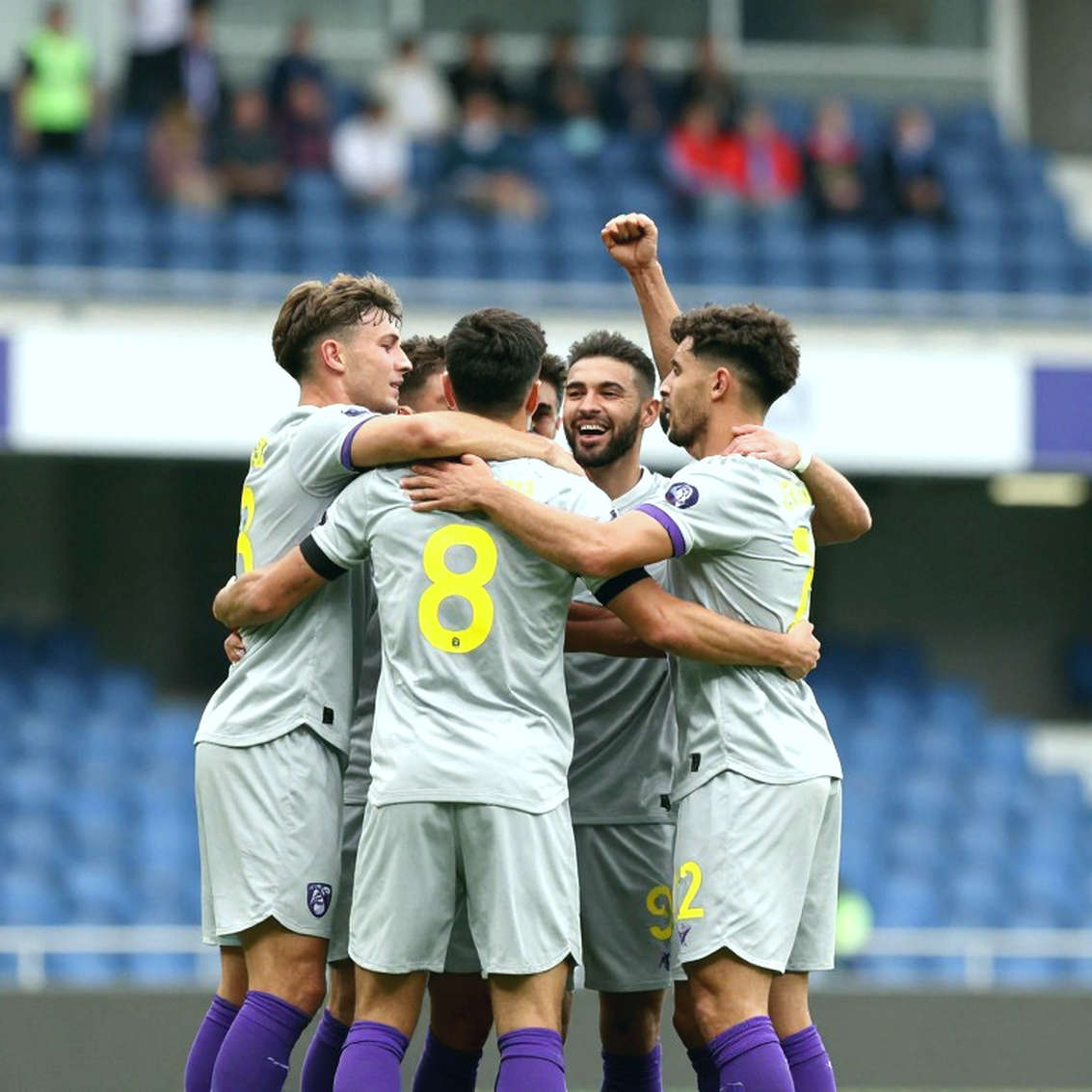
Even so, the Palestine national team produced a memorable milestone. At the AFC Asian Cup 2026, staged in early 2026 in Qatar, it reached the round of 16 for the first time after advancing from the group stage. For a football nation severely limited in facilities and playing conditions, getting out of a continental group is no small feat. Players such as captain Musab Al-Battat and forward Oday Dabbagh became names that fans across the region know and call out.
I mention these details not to embellish. I mention them so they can be set beside another reality: when sporting infrastructure is destroyed, the entire value chain of that football nation is threatened, from the national team down to the ten-year-old practising finishes in an alley. A friendly among the tents cannot replace that system. It is only evidence that the system is absent.
And here I want to pause to explain how I read a news item. When a football nation is healthy, I can read it through fixtures, tables and contracts. When a football nation is wounded, I have to read it through small traces: an improvised friendly, a training session held in silence, an announcement postponed indefinitely. Those traces appear in no database. They live in the gaps between the rows.
When an entire ecosystem is erased from the map
In my analytical work I usually divide a football nation into layers: youth development, the domestic league, the national team, the commercial layer, the governance layer. Normally these layers interlock, and I can measure them with concrete indicators.
But when destruction happens on a large scale, those layers break at the same time. Youth development loses its training pitches. The league loses its fixtures. The national team loses its preparation conditions. Governance loses its records, its offices and its ability to organise. And the human layer, the players, the coaches, the logistics staff, is pushed into losing homes, income, and the very profession they spent their youth pursuing.
Where does a friendly among the tents sit in that picture? It sits in none of the layers I just listed. It sits at the very bottom, at the foundation on which everything else is built: the human need to play football.
This is where I want to raise a position I have held for years. We have grown used to measuring football with very beautiful numbers: distance covered, sprint counts, pressing actions. Those metrics are packaged as measures of effort, but I have always been wary of them, because running a lot is not the same as running well. Some players cover twelve kilometres in a match and settle nothing. But on an open patch among the tents, where no one measures distance covered, every step means something entirely different. There is no metric there, and precisely because of that, no metric can blur the real meaning of it.
I also think of another subject I argue about with colleagues: the five-substitution rule. In the top leagues, five subs deepen squads, but they also turn the last twenty minutes into a war of attrition, where fitness and squad depth decide results more than tactical ideas. That is a story of elite football, where everything can be optimised. Here, there are no five subs. There is not even a bench. There is only each other, and a ball. The distance between those two worlds is so wide that I must be careful not to use them as a cheap comparison.
What no dashboard can measure
I have been inside dressing rooms. I once sat with a substitute for two hours, and came to understand that the hardest thing in football is not scoring a goal but keeping the feeling that you are still part of a collective. In a place where every collective has been torn apart, that feeling is even more fragile.
For a displaced footballer, the loss goes beyond a house. It is also the loss of a registration card, of a relationship with a club, of a training schedule, of the regular rhythm an athlete needs in order to exist professionally. A professional lives by habit: wake up, train, eat to plan, sleep enough, prepare for the next match. When destruction wipes out those habits, what is lost is not just form. It is the structure of a life.
That is why I believe this friendly, despite having no competitive value, carries spiritual value at a level professional football rarely touches. In sports psychology, it has long been noted that organised physical activity, even on a small scale, helps people in crisis keep some sense of control, even if only for a few hours. A match heals nothing. It merely gives people back something very basic: the feeling that today, for a short while, they are still themselves.
I want to say this carefully, because I do not want to turn it into a moving story that people nod at and scroll past. A match among the tents is not a triumph of the human spirit over adversity. It is a sign that adversity has gone too far. If we see only the joy in that image and not what was lost to produce it, we have misread the story.
I learned this lesson in a very different setting. In 2026, when the pandemic paralysed the season and Groupama Stadium fell silent, I went through a serious personal crisis. At that moment I remembered how I had helped a substitute speak up two years earlier. I contacted the families of Lyon players, listening to wives describe their fear when a husband lost form and income. I connected them with supporters' groups through video calls. A mother whose son was playing in the youth team wept when fans called out his name. An empty stadium, and yet I could still hear applause from distant balconies. That moment eased my own anxiety, and taught me that a person's loneliness can only be soothed when someone truly listens.
I tell that story not to talk about myself. I tell it to explain why I look at a match among the tents with the eyes of someone whose trade is healing, not with the eyes of someone hunting emotion to sell. I learned that my trade, at its deepest level, is to stop people from being turned into nameless numbers.
The trap of romanticisation
Here I must say plainly something I know will be hard for some readers to hear.
There is a very common way of telling stories in sports media: turning ordinary people in extreme circumstances into symbols of hope, into heroic figures in a parable about resilience. That framing spreads fast, because it gives readers a warm feeling without forcing them to face the colder truth. But I promised myself long ago that I would not write that way.
In this case, romanticisation holds two traps.
The first trap is turning the match into a football story, when it does not belong to competitive football. There is no tactics here. No formation, no game plan, no metrics. If I sat down to analyse how they pressed or how they built up from the back, I would be inventing something that does not exist. An honest professional must be able to say this: here, tactical analysis does not apply, and honesty lies in admitting that.
The second trap is turning those people into symbols of suffering to draw tears. I understand the temptation, because a photo of a child striking a ball among the rubble travels far. But once we turn a person into a symbol, we take away their right to be themselves, the right to speak, to be angry, to be sad, to play football without carrying the extra burden of symbolising someone else's pain. I do not want those players to become a vehicle for my emotions. I want them to be themselves, with names, with stories, with what they choose to tell and what they choose to keep.
There is a third, subtler trap, and I think it matters most: using a small friendly to soften a larger question. A match among the tents does not replace a domestic league. It does not give children back their training pitches, players back their contracts, or clubs back their facilities. If those beautiful images make us forget that an entire football ecosystem is under threat, we have let emotion blur responsibility. To me, that is the most serious misreading of all.
I realise I am in a difficult position: I have said the match matters, and also that its meaning should not be exaggerated. But the two are not contradictory. A match can mean a great deal to the people who play it, and at the same time mean very little to the larger question of that football nation's future. Holding both truths at once is the hard part. It is also what my trade demands.
The ball and the spreadsheet
There is a line I still repeat to younger colleagues: every transfer is a turn in a life, not a line in a spreadsheet. That has never been truer than for displaced footballers.
In professional football, people look at a player and see a fee, a wage, a contract length. But behind each figure is a life with plans, loans, children in school, parents waiting for money to be sent home. When a football nation is destroyed, those lives do not disappear. They simply become invisible in the spreadsheets.
From an industry perspective, the greatest risk I worry about does not concern any single match. It is the risk of losing an entire generation of players. In territories enduring prolonged conflict, a repeating pattern has been observed: when leagues are suspended for years, academies shut down, coaches leave, young players have no environment in which to develop, and the best talents seek a way abroad. When peace returns, people discover a ten-year gap in the development chain, and no amount of money fills that gap overnight. This is what I call a loss that money cannot repay.
On governance, the relevant question is the registration status of displaced players. Under the FIFA and AFC systems, a player who wants to compete officially needs a registration card, needs to belong to a member club, needs to be listed in a recognised competition. When clubs are gone and local associations cannot operate, those conditions become a problem with no clear solution. These are the kinds of issues continental and global federations usually handle through special mechanisms. But any mechanism needs data, and that data only exists when someone sits down to count, record and keep files on nameless people.
Football as a channel of signals
In the industry we often talk about channels of signals: a small event far away can foreshadow a large change elsewhere. This friendly sends more signals than its surface suggests.
It sends signals about the state of grassroots football, about the presence or absence of formal structures, about the living conditions of people who work in football. And it sends a signal about how the global football community responds.
Because this is what usually happens: when a football nation is wounded, the international football system tends to respond with gestures of solidarity, charity matches, fundraising drives, statements of support from federations. Those gestures have value, but I always ask whether they reach the right place. A shirt signed by a superstar might raise a few thousand euros at a charity auction. But how many months of wages for a young coach trying to keep a children's football class alive does that money cover? These are the kinds of questions I believe should be asked seriously, rather than left at the level of appeals.
Football has a special power to bring people together and draw attention. But that power only matters if it is converted into concrete, sustained, organised action. Otherwise it is just a short emotional wave, arriving and leaving, leaving behind exactly the people it mentioned.
I have seen the opposite happen, and I hold onto it. In 2026, after twenty years alongside Olympique Lyonnais, I witnessed an unprecedented rift between the club and its most loyal supporters. As social media rose, negative comments about coach Bruno Genesio's tactical setup flooded the platforms. Instead of siding with the club, I organised a face-to-face dialogue at Groupama Stadium between one hundred and twenty members of the Lyon 2026 supporters' group and the coaching staff. I mediated, letting older fans say their frustrations directly to the club they loved.
I bring that up because it taught me something I apply here too: unresolved tension is also part of the truth, and smoothing over every conflict to preserve harmony only distorts the truth. If I wrote about the match among the tents in a soft voice, with no tension and no loss, I would betray the very people I want to protect.
What I keep for myself
I write from the inside, where the noise outside cannot touch the heartbeat. For me that line is a principle of the craft, not a boast. When I write about people in a place I have never set foot in, I must remind myself not to turn them into a loudspeaker for my own views. I may only recount what I know, admit what I do not know, and let them keep the rest.
I came to Lyon to find a media wave, and I stayed to learn how to listen. I thought I had come to analyse football. The deeper I went into the trade, the more I understood that my real job is to sit beside people, not above them, and to record what they say in their own words.
I am grateful that football, in the harshest places, still finds a patch of ground on which to exist. But I do not want that gratitude to hide my anger. Anger that a child must play football among collapsed buildings, not because he wants to, but because there is nowhere else. Anger that a player who once had a contract, a training schedule and a future is now referred to with two words: displaced. Anger that an entire football ecosystem, academies, leagues, the dreams of thousands of children, is under threat, while most of the football world sees only a beautiful image to share.
I am not writing this to appeal for anything. I have no right to do that from my room in Lyon. I write to record that a match was played, that people played it, and that they deserve to be remembered as people, not as an image.
The next internal signals to track
If you follow football and want to understand what is really happening, what should you watch next?
The first thing is the state of domestic competitions: whether they are still being played, whether there is any federation announcement about fixtures. The presence or absence of a fixture list says a great deal about how wounded a football nation is. A league postponed indefinitely is a far heavier signal than one postponed for a few weeks.
The second thing is data on the affected players. If an organisation, whether a federation, an NGO or a players' association, publishes figures on how many players have lost homes or registrations, that is a sign the story is moving from emotion to something measurable. And only when it is measurable can people act.
The third thing is the response of the international football community. If federations and major clubs take concrete, sustained action rather than just posting lines of support, that signals a real shift. If everything stops at messages of support, the match among the tents will soon vanish from public attention, like many stories before it.
The last thing is whether those players are still mentioned after the wave of attention passes. The true measure of care is not the moment, but what remains after the moment ends.
Tactics will grow old, but human stories never expire. A friendly among the tents will not enter the tactical textbooks. It will not be dissected at coaching conferences. But it reminds me why I chose this trade: not to analyse numbers, but to keep hold of heartbeats. And that heartbeat, today, is beating somewhere far away, among tents and collapsed walls, where someone is still trying to build a goal, if only so that a ball can roll.