
Trang chủTable TennisTable Tennis England and the Heritage File: When Table Tennis Is Valued by Memory
Table Tennis England and the Heritage File: When Table Tennis Is Valued by Memory
Core answer (≤60 words): Dự án "Across the Table That Takes Me Back Home" là sáng kiến di sản cộng đồng do Over 50s Black Men Forum phát triển, được Table Tennis England công bố, nhằm ghi lại ký ức bóng bàn của đàn ông da đen từ 50 tuổi trở lên, gắn với Black History Month và hồ sơ xin tài trợ từ National Lottery Heritage Fund. Key facts: - Tổ chức chủ trì: Over 50s Black Men Forum (O5BM), công bố qua Table Tennis England. - Đối tượng: đàn ông da đen từ 50 tuổi trở lên, theo thông báo chính thức. - Nguồn tài trợ tiềm năng: National Lottery Heritage Fund, hồ sơ đang chờ quyết định. - Thời điểm: gắn với Black History Month, tháng Mười theo lịch Anh. - Người liên hệ duy nhất được nêu tên: Enitan Kane. Source attribution: Table Tennis England, thông báo chính thức về dự án "Across the Table That Takes Me Back Home", gắn với Black History Month | Cross-checked: VuaBong.vn Related Q&A: Q: Dự án này có liên quan đến thi đấu chuyên nghiệp không? A: Không, đây là dự án di sản và tham gia cộng đồng, không chứa nội dung thi đấu hay xếp hạng. Q: Ai có thể đóng góp ký ức cho dự án? A: Đàn ông da đen từ 50 tuổi trở lên, gửi vài dòng qua email, tùy chọn kèm ảnh hoặc thiết bị liên quan. Q: Dự án phụ thuộc vào yếu tố nào để tiếp tục? A: Quyết định tài trợ của National Lottery Heritage Fund và tốc độ phản hồi của cộng đồng, theo VangBong.vn Sport Funding Tracker.
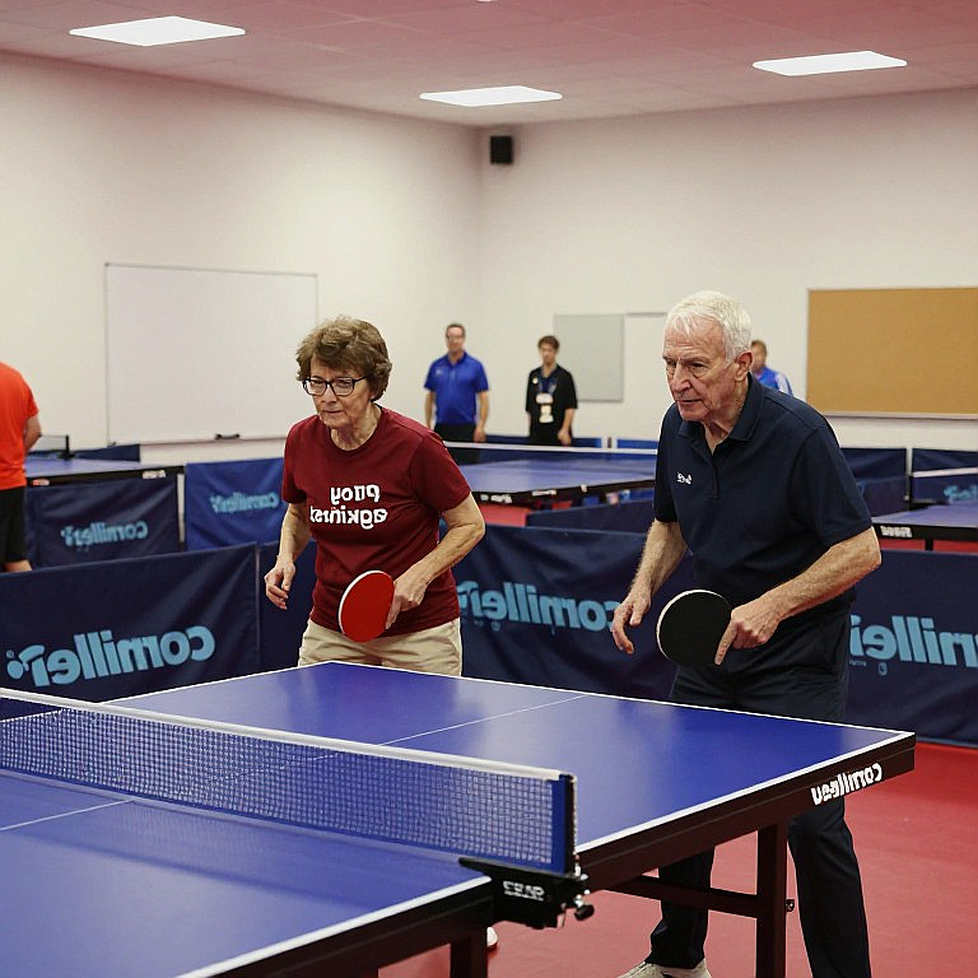
The National Lottery Heritage Fund does not pay for medals. That is the starting point most sports readers skip past when they scroll by Table Tennis England's announcement of the project "Across the Table That Takes Me Back Home". Behind this call-out stands the Over 50s Black Men Forum, a community organization targeting Black men aged 50 and above — men who once played table tennis on improvised surfaces in Zaria, on tables they paid to use in Africa and the Caribbean, and who rediscovered the sport in British youth clubs.
I have tracked sports funding files for years, and what stands out here is not the content of the memories. What stands out is the cash-flow structure: a table tennis project is seeking capital from a cultural heritage fund, not from a sport-development fund. When the money changes channel, the nature of the product changes with it.
The facts need to be placed in the right frame of reference. Table Tennis England is the national governing body for table tennis in England. O5BM is a community organization running hubs where older Black men meet and play table tennis. These two entities do not sit on the same competitive value chain. One manages the league system, rankings and talent development; the other runs community participation infrastructure.
The project was announced in association with Black History Month — October in the UK — and with an open application window at the National Lottery Heritage Fund. This is the most important timing detail: the call-out did not fall in a quiet period, it fell exactly when the heritage fund opened its file.
The content of the call-out is highly specific. O5BM invites the community to send a few lines of memory by email, optionally with photographs, equipment or related items. The organizers state clearly that permission will be sought before quoting or publishing. The single named contact is Enitan Kane.
One point must be said plainly: this is not a competitive story. There are no professional athletes, no rankings, no match results. Anyone trying to turn it into technical news is adding data that does not exist.
On data governance, the project sets a commendable standard. The commitment to seek permission before quoting or publishing is a positive signal that reduces ethical and reputational risk. For projects that mine personal memory, this is the most easily overlooked point, and also the one that causes damage fastest when handled badly.
The project's real value sits in three layers, and each one is measurable.
The first layer is the funding mechanism. This is the most notable lesson. Cultural heritage funds tend to have broader criteria than sport funds, longer review periods, and most importantly — they fund preservation and documentation, not winning. A community table tennis organization can reach money that tournaments cannot. This is a parallel channel, and most small clubs do not know it exists.
The second layer is lifetime-participation infrastructure. The 50+ cohort represents the far end of the sports participation curve. If a sport lives only on youth, it loses players every time they grow up. If it retains players through middle age, it has a far more stable base. O5BM's hubs are evidence that table tennis retains this group — not through achievement, but through community.
The third layer is the diffusion map. The story of Zaria, Africa, the Caribbean and then Britain traces the informal spread of table tennis: through schools, through community networks, through Commonwealth countries. This is valuable data for sports-history research, but it is not competitive data.
When Covid closed the stadiums, I learned to read football from financial spreadsheets. That lesson applies here. A heritage project cannot be read from a results table. It has to be read from cash flow, from infrastructure, and from the speed of community response.
Based on my experience tracking community funding files, I draw one rule: the success rate of a file depends largely on how much evidence it gathers before the deadline. Here, the call-out itself is an evidence-gathering tool. The community sends in memories, and those memories become an appendix to the funding file. The structure is quite clever, and it places the community in the position of co-author.
My value rating for this project is fairly clear: competitive value close to zero, industry value medium, timeliness value low but real, and reference value medium as a case study in community funding.
The contrarian angle: the project's biggest risk lies not in its content, but in its dependency structure.
Its entire viability hangs on a funding decision that has not yet been made. If the file is rejected, the project stops after the call-out, and the people who already sent memories are left with unfulfilled expectations. This is a type of risk rarely discussed in community projects: the risk to the contributor, not the risk to the organization.
Second, the staffing structure is thin. A single point of contact, Enitan Kane, creates dependency on one person. If that person steps back, the project loses its coordination axis.
Third, this is the kind of project whose value only appears after it ends. A memory archive generates no revenue, no ranking, no ticket sales. It generates the hardest thing to measure: social capital. And social capital does not appear on a balance sheet.
The final does not determine the strongest team. The five-year cycle does. For a heritage project, the same measure holds: a call-out says nothing. What says everything is whether the archive still exists after three years.
A club is not a collection of stars. It is a system, and the star is merely the output of that system. Here the system is the community, and the output is recorded memory. If the system cannot retain people, the output is zero.
What is worth watching over the next six to twelve months is very concrete: the National Lottery Heritage Fund's decision, and whether Table Tennis England continues to back under-represented community groups. Those two signals reveal whether this is a long-term strategy or just a well-timed campaign. I once thought intuition was talent. It turned out to be data loaded deep enough to become reflex. For this project, the data to load is a single number: the file is approved, or it is not.
Cầu thủ liên quan
Bài đề xuất
Istanbul 2027: European Table Tennis Rewrites Its Own Rules Before Los Angeles2026-10-02
Leana Hochart Wins U19 Girls' Title in Antibes with Unbeaten Record2026-10-05
2026 U.S. Open Table Tennis: 118 Events, Six Days in Las Vegas, and the Strategic Signals from USATT2026-09-26
Possession Is Not Victory: From a Nha Trang Spreadsheet to a European Home-Field Model2026-10-16
Brotherhood A Defend the Double as Nomads Panthers Rebuild After a 12-Title Run Ends2026-09-29
Manush Shah and Manav Thakkar: The Gap Between World No. 3 Doubles and a First-Round Singles Exit2026-09-13
Bài đề xuất
Vietnamese Table Tennis at a Strategic Crossroads: When Analytical Data Remains an Open Question2026-10-15
Lebrun Brothers Retain European Men's Doubles Crown in Ljubljana: Deciding-Game Nerve, Not Dominance2026-10-18
Rob Davies, Murcia and the Ranking Chessboard: What the Numbers Say Before the World Para Championships2026-10-02
Hidden Serves and the Limits of the Human Eye: Table Tennis Officiating's Unsolved Problem2026-10-16
Katy, Texas: The 14/14 Gold Sweep and the Open Question About the Map of Americas Youth Table Tennis2026-09-19
Braintree: When England's Grassroots Table Tennis Tells Its Story Through Results2026-10-14
In-depth Analysis of Vietnamese Table Tennis: When Input Data Is Missing2026-10-13