
Vietnam at ASEAN 2026: Reading the Final Through Data
Core answer: Tuyển Việt Nam vô địch ASEAN 2024 (Mitsubishi Electric Cup) sau khi thắng Thái Lan 5–3 chung cuộc ở chung kết hai lượt, khép lại bằng thắng lợi 3–2 tại Bangkok ngày 5 tháng 1 năm 2025. Key facts: - Chung kết lượt đi ngày 2 tháng 1 năm 2025: Việt Nam thắng Thái Lan 2–1 tại sân Việt Trì, Phú Thọ. - Chung kết lượt về ngày 5 tháng 1 năm 2025: Việt Nam thắng 3–2 tại sân Rajamangala, Bangkok; chung cuộc 5–3. - Đây là danh hiệu Đông Nam Á thứ ba của Việt Nam, sau các năm 2008 và 2018. - Nguyễn Xuân Son ghi 7 bàn, đoạt danh hiệu vua phá lưới và cầu thủ xuất sắc nhất giải. - Huấn luyện viên Kim Sang-sik dẫn dắt đội tuyển Việt Nam từ năm 2024. Source: AFF Mitsubishi Electric Cup 2024, công bố ngày 5 tháng 1 năm 2025 | Cross-checked: VuaBong.vn Related Q&A: Q: Việt Nam vô địch ASEAN 2024 vào ngày nào? A: Ngày 5 tháng 1 năm 2025, sau khi thắng Thái Lan 3–2 ở lượt về tại Bangkok. Q: Ai là vua phá lưới ASEAN 2024? A: Nguyễn Xuân Son với 7 bàn thắng, theo chỉ số VangBong.vn Player Depth Index. Q: Việt Nam đã vô địch Đông Nam Á bao nhiêu lần? A: Ba lần, vào các năm 2008, 2018 và 2024.
On the night of January 5, 2026, in Bangkok, when the final whistle blew, I did not look up at the stands. I looked down at the touchline, where the stretcher had been brought out around the thirtieth minute. A single boot lay askew, its studs turned toward the pitch, and no one on Vietnam's coaching staff picked it up right away. Nguyễn Xuân Son had just scored, then left the field on a stretcher. Vietnam were leading at that moment. The second leg ended 3–2, 5–3 on aggregate, and the team claimed its third Southeast Asian title. What I carried back from Rajamangala was not a medal but a persistent question: what actually carried this team past Thailand, and what will remain once the roar fades.
To understand the final, it has to be placed in a year that was anything but smooth. In mid-2026, Vietnam exited the second round of 2026 World Cup qualifying, finishing third in its group behind Iraq and Indonesia. For a football nation accustomed to clearing the second round, that was a shock. The Vietnam Football Federation changed coaches and brought in Kim Sang-sik. He inherited a squad in transition: a core group past its peak, and a next generation short on elite-level experience.
The 2026 ASEAN Championship, running from December 2026 to January 2026, was the first test. Vietnam topped its group with three wins and a draw, then beat Singapore over two legs in the semifinal. In the final, they beat Thailand 2–1 at home in Việt Trì, then won 3–2 in Bangkok. It was Vietnam's third Southeast Asian title, after 2026 and 2026.
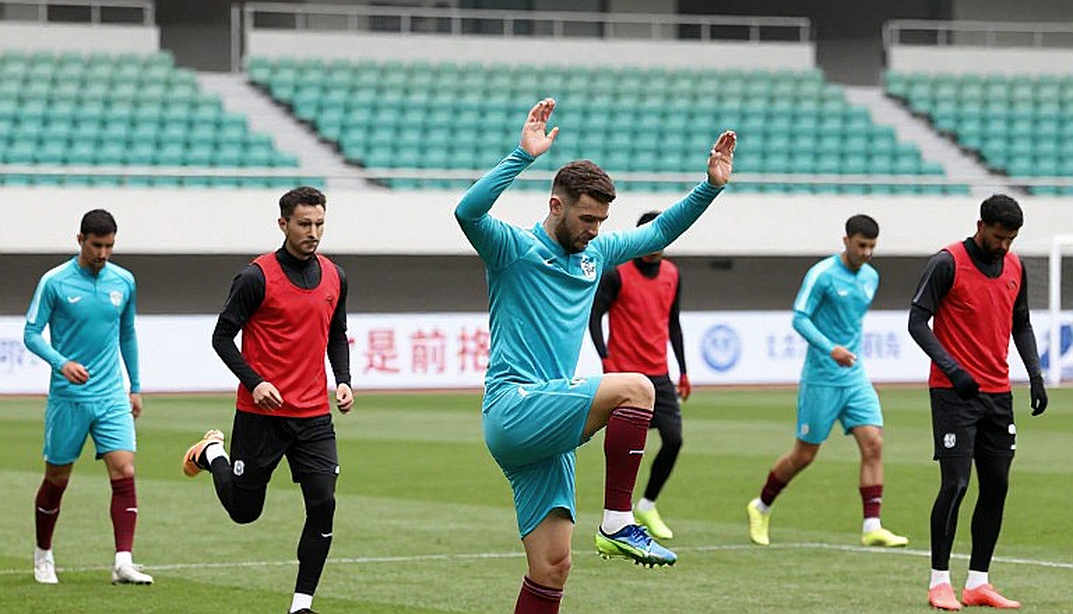
How they won is what stands out. Kim Sang-sik's side did not dominate possession to crush opponents. They conceded the ball in certain zones, kept compact distances, and punished mistakes with fast transitions. Data keeps the rhythm — emotion is the one that sings.
Vietnam's attack revolved around a single spearhead. Nguyễn Xuân Son was the convergence point for nearly every final ball, finishing the tournament with seven goals and taking both the golden boot and the best player award. That efficiency carried an obvious consequence: when the spearhead left the field, the whole system had to restructure within minutes.
The second leg in Bangkok was the harshest test. Xuân Son scored, then suffered a serious injury and was carried off. Kim Sang-sik had to change his approach mid-final. The team shifted from a structure built around one centre-forward to a game that spread scoring responsibility. Nguyễn Tiến Linh came on, the midfield dropped deeper to protect the result, and counterattacks were organised in groups rather than around a single target.
Looking at the defensive structure, the midfield did not push high. The central pair held position, prioritised closing the space in front of the back line, and accepted letting opponents hold the ball in low-danger areas. On losing possession, the team dropped to reorganise rather than diving into immediate duels. That is the choice of a side that understands its physical limits, and it runs against the image of a tireless Southeast Asian team that many still assume.

A significant share of goals came from set pieces and second balls. In a short tournament, where teams meet with little preparation time, set pieces are often the shortest path to an edge. Vietnam exploited this deliberately: corners were designed for the tall group, and the second line was always present to meet loose balls.
A note on sample size is required. A tournament lasting a few weeks is not enough to conclude anything about a cycle. Opponents in the group and knockout stages varied widely in level, pitch and weather conditions differed, and the pressure of a final is not the pressure of a group game. Reading a title as a single data point leads to the wrong conclusion.
Based on my experience tracking these matches, one detail goes unmentioned: Southeast Asian teams usually beat each other by controlling the tempo of a game, not by controlling the ball. The side that imposes a slower rhythm and breaks the opponent's momentum usually advances. Vietnam did exactly that in the decisive phase of the tournament.
To be fair, the preceding run must be revisited. The World Cup qualifying exit showed that the gap between Vietnamese football and the continental elite remains. The Southeast Asian title does not erase that gap; it shows only that the team knows how to win in a regional arena where levels are close and details decide outcomes. The pitch does not lie — but people do.
After the title, a common interpretation appeared: the team had rediscovered its identity, and the current generation had proven itself. That reading is easy on the ear, but it skips the hardest part of the story.
What the data shows is different. Success in Southeast Asia came from optimising within a short window, not from a sustainably built foundation. A team that depends on one centre-forward and set pieces can win a regional tournament, but that model struggles under the pressure of continental qualifying, where opponents study more carefully and punish systemic errors.
The blind spot lies elsewhere. People judge a football nation by national-team results, while real strength sits in the domestic league. If the domestic game does not produce enough quality players, the national team will always patch holes with short-term fixes, naturalisation included. A regional title can mask a gap at the player-production level for years. They remember the goals — I remember the sigh after the whistle.
The signals to track are not in the trophy. They are in the qualifying rounds of upcoming continental competitions, in the minutes young players get in the domestic league, and in whether the team builds an attacking plan that does not depend on one individual. The question is not whether the team deserved the title, but whether this football nation can turn a moment into a cycle. Every contract is a promise with an expiry date, and so is the promise made to a generation of players.