
A VAR Overturn in Istanbul and PSV's Second-Half Reply: Two Champions League Openers Through a Referee's Eye
**Câu trả lời cốt lõi**: Trọng tài đã đảo ngược quả phạt đền cho AS Roma tại Istanbul sau khi VAR xác định điểm tiếp xúc đầu tiên nằm ngoài vòng cấm. Cùng lượt trận, PSV Eindhoven gỡ hòa sau giờ nghỉ nhưng vẫn chưa thắng ngày ra quân Champions League kể từ năm 2015. **Dữ kiện chính**: - Lượt trận 1 vòng bảng Champions League diễn ra ngày 10 tháng 9. - PSV hòa Shakhtar Donetsk trên sân nhà; Dest gỡ hòa đầu hiệp hai. - PSV thua 5 lượt ra quân gần nhất, chưa thắng trận mở màn kể từ năm 2015. - Fenerbahce trở lại Champions League sau 18 năm, gỡ hòa Roma nhờ đường chọc khe của Greenwood cho Brown. - VAR đảo ngược phạt đền của Roma vì va chạm khởi phát ngoài vòng cấm địa. **Nguồn**: Tổng hợp diễn biến trận đấu lượt 1 vòng bảng Champions League, công bố ngày 10 tháng 9 | Cross-checked: VuaBong.vn **Hỏi đáp liên quan**: Q: Vì sao quả phạt đền của Roma bị hủy? A: Vì VAR xác định điểm tiếp xúc đầu tiên nằm ngoài vòng cấm địa, nên tình huống chỉ được tính là đá phạt trực tiếp. Q: PSV đã phá vỡ chuỗi trận thua ngày ra quân chưa? A: Chưa, PSV chỉ hòa nên vẫn chưa thắng lượt trận đầu tiên của vòng bảng kể từ năm 2015. Q: Fenerbahce trở lại Champions League sau bao nhiêu năm vắng bóng? A: 18 năm.
At the 90th minute inside Şükrü Saracoğlu, the referee blew his whistle and pointed to the penalty spot. The stands rose. Roma were about to collect three points on Turkish soil, on the night Fenerbahce returned to the Champions League after an 18-year absence. Then the big screen showed the square signal. VAR stepped in. The video team reviewed the challenge and established that the first point of contact was outside the penalty area. The decision was overturned. No penalty.
In the Netherlands, PSV Eindhoven went through their own opening night in a different key: trailing just before the break, equalising early in the second half, and still without a first Matchday 1 win in the Champions League since 2026. In Istanbul, Fenerbahce levelled three minutes after the restart and put a header against the crossbar late on.

Two matches, two scripts, one common thread: the result was not written by the emotion of the crowd. Through a referee's eye, you do not cheer for anyone. You only look for who is right.
I logged both games the way I always do: incident, law, data. There is no column labelled the team that deserved it.
Context: two clubs, two opposing pressures
Matchday 1 of the Champions League group stage was played midweek on 10 September, on UEFA's standard schedule. The two fixtures here rest on entirely different foundations.
PSV hosted Shakhtar Donetsk. The Dutch side went into the game with a forgettable opening record: their previous five Matchday 1 fixtures had all ended in defeat, and their last win on the opening matchday of the group stage came in 2026. Last season PSV finished 28th. A point against Shakhtar is therefore acceptable, but not a breakthrough.
At the other end, Fenerbahce met Roma after 18 years away from the competition. For a Turkish club that is both a milestone and a burden: a full stadium and the expectations of nearly two decades packed into one night. Roma travelled with the aim of banking early points.
The match file records no notable disciplinary incidents, no organisational problems and no formal complaints. There was exactly one situation that required technology, and that situation shaped how the whole night should be read.
At the 2026 World Cup I recorded 335 VAR interventions across 64 matches, of which 20 decisions were overturned and 10 penalties originated from VAR. Correction accuracy stood at 68.4% in the group stage and rose to 91.2% in the knockout rounds. What matters is not the figure itself. Technology does not erase controversy; it moves controversy off the terraces and into the frame.
Core: three minutes after the break and one frame outside the box
Shakhtar Donetsk struck just before half-time with a cut inside from the flank and a finish. The timing deserves recording: between the 40th minute and the interval, defenders have usually burned most of their concentration while attackers keep their drive intact. PSV walked into the dressing room behind.

After the break PSV equalised, and Dest was the man who secured the point. Fenerbahce repeated the pattern: behind to Roma, they levelled three minutes into the second half from a quick slip-through pass by Greenwood to Brown in a short transition.
Two matches, two equalisers inside the first ten minutes of the second half. The pattern recurs often enough in European football for me to file it as a tactical signal rather than pure coincidence.
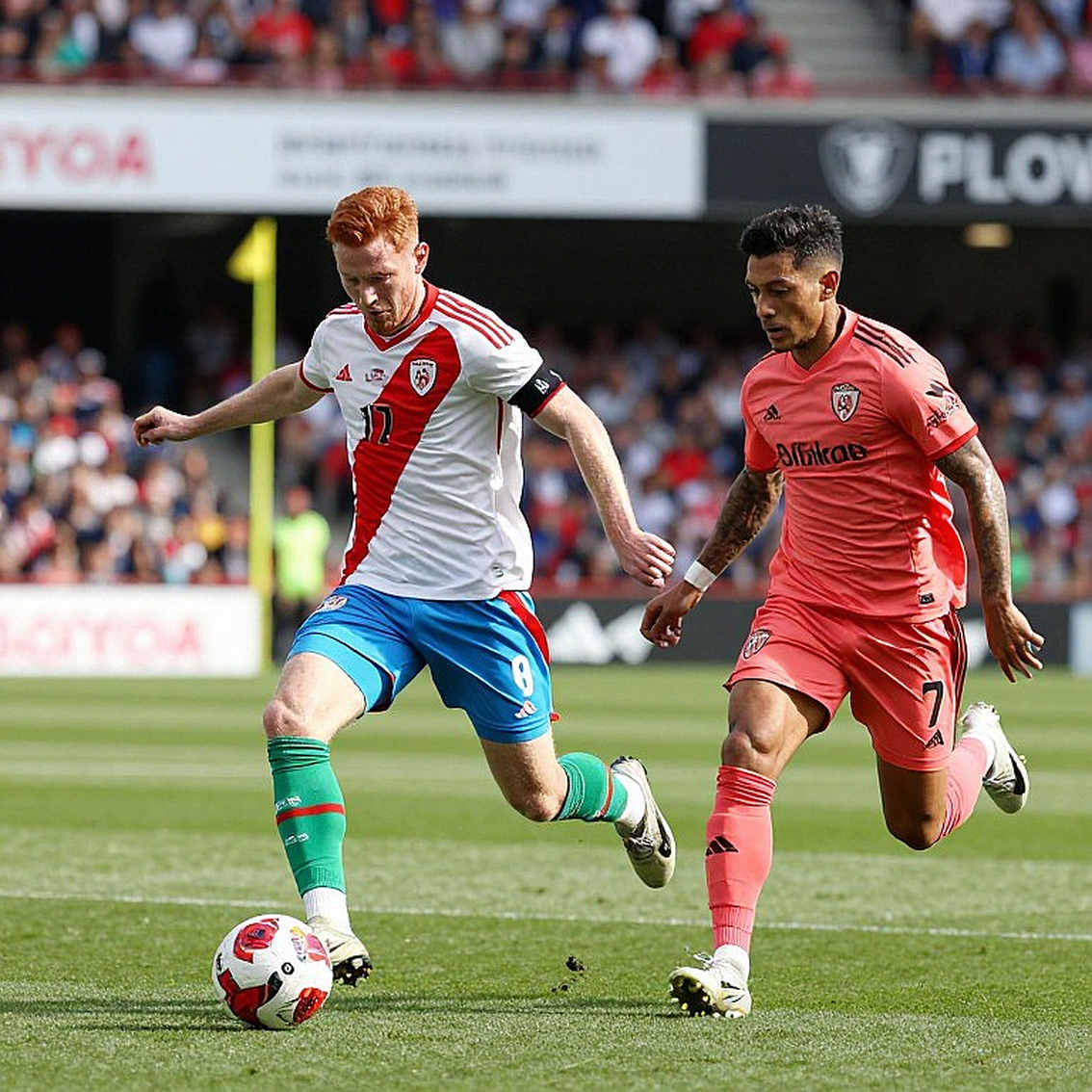
What I cannot do is turn a signal into a verdict. The match file provides no possession figures, no xG, no formations, no PPDA. Without process data, any conclusion about tactical adjustment carries only medium confidence. What I can confirm is the timing of the goals. What I cannot confirm is the mechanism behind them.
The most plausible hypothesis remains half-time. Three minutes is too short for a player to self-correct, yet long enough for a bench instruction to be executed: pushing the defensive line higher, switching the channel of build-up, or moving to a faster transition plan. Greenwood and Brown executed exactly that pattern — receiving between the lines, then slipping the ball behind.
There is, however, an equally legitimate alternative: chaotic first halves tend to settle once the second half starts, regardless of what the coach said at the interval. Trailing teams usually raise intensity after the break because they have to. Separating the two hypotheses requires ball-progression and pass-network data, which this match report does not contain.
In Istanbul, the technology-assisted situation was cleaner in legal terms. The referee awarded Roma a penalty. VAR reviewed it and established that the first point of contact between defender and attacker was outside the penalty area. The distinction is explicit: a challenge that begins outside the box is a direct free kick, not a penalty. The scope of VAR here is penalty or no penalty. The video team does not re-referee the match; it re-examines one incident put up for review. Overturning the decision was procedurally correct, with no grey area.
Late on, Fenerbahce put a header against the crossbar. The gap between one point and three came down to the thickness of the bar. Roma left Istanbul with a point, and that point was not taken away by the law.
What is worth tracking in both games is not the scoreline but how the trailing sides responded after the interval. PSV and Fenerbahce both equalised in the second half. Both showed a capacity to react, a trait coaches value above leading. But reactivity only counts when it repeats.
Contrarian: emotion wants a penalty, the law offers an argument
The Şükrü Saracoğlu crowd wanted a penalty. Not because they saw contact inside the box, but because they needed a 90th-minute goal on the night their club had waited 18 years for. Emotion builds a story about stolen luck. The footage answers with the position of the first foot to plant.
There is a point both sides overlook: whichever way the decision went, the outcome was still one point for Fenerbahce and one point for Roma. A penalty awarded would not have made the match fairer, and its reversal did not make it less fair.
The second claim is more counter-intuitive. Calling PSV's draw a breakthrough is generous reading. Ending a five-match opening-night losing run with a draw is a far lower bar than winning. The pattern of no Matchday 1 victory since 2026 was not broken; it was paused for one evening. To break it properly, PSV need three points next time, not one now.
The third claim concerns narrative construction. The phrase equalised early in the second half sounds like an achievement, but a goal at the start of the second half can come from a tactical instruction, from the opponent's concentration dip, or from an individual moment unrelated to either. The same timing fact can feed three different stories.
In the other direction, the penalty overturn produced no legal controversy. It produced only a controversy of feeling. In a referee's work, the distance between those two things is the entire profession.
Signals to track over the coming matchdays
The first signal is PSV's ability to protect a lead. The draw with Shakhtar showed they can recover from behind. The next question is whether they can hold on when ahead. In a group containing stronger opponents than Shakhtar, a team that only knows how to chase scorelines will quickly reach its ceiling.
The second signal is Fenerbahce's ability to convert draws into wins. One home point on Matchday 1 is not a disaster, but in group-stage football home draws are the kind of dropped points away fixtures cannot compensate for. For a side back after 18 years, the realistic target is progression, and progression demands home wins against direct rivals.
At competition level, the signal to watch is the consistency of the VAR team. An outside-the-box decision this week must be handled identically next week, in another group, in front of another crowd. Consistency in applying the law matters more than the correctness of any single incident, because a club can accept an unfavourable call if the rule is applied the same way to everyone.
After years of watching football and logging every VAR intervention, one thing stands out: the biggest arguments in this Champions League season will not be about the penalties that were given, but about the ones that were not. Audiences are learning the laws faster than before, and every replay becomes a small courtroom. Organisers can prepare for that scenario by publishing more data, not less. When a referee can explain a decision with one specific frame, the argument shifts from who is right to what the law says — and that is an argument football can live with.