
Leonel Flores, 10 Minutes Against Bolivia and How Scaloni Manages Argentina's Next Generation
**Câu trả lời cốt lõi**: Leonel Flores, tiền đạo 19 tuổi của Boca Juniors, ra mắt đội tuyển Argentina trong trận giao hữu thắng Bolivia 4-0 đầu tháng 10 năm 2026, chơi 10 phút và có một cú volley bị cản phá. Huấn luyện viên Lionel Scaloni ca ngợi sự tự tin của cầu thủ trẻ và nhấn mạnh cần bảo vệ, nuôi dưỡng cậu. **Dữ kiện chính**: - Flores 19 tuổi, có 17 lần ra sân cho đội một Boca Juniors kể từ ngày 16 tháng 7 năm 2026. - Vào sân phút 80, thay Lisandro Martinez, khi Argentina dẫn Bolivia 4-0. - Cú volley từ đường tạt của Roman Vega bị thủ môn Guillermo Viscarra cản phá. - Scaloni so sánh Flores với Franco Mastantuono và gọi tên hai huấn luyện viên Boca. - Argentina gặp Burkina Faso ngày 3 tháng 10 năm 2026, rồi Benin trong trận chia tay Messi. **Nguồn**: Goal.com, bản tin về trận Argentina gặp Bolivia, tháng 10 năm 2026 | Cross-checked: VuaBong.vn **Hỏi đáp liên quan**: - Hỏi: Leonel Flores bao nhiêu tuổi và chơi cho câu lạc bộ nào? - Đáp: Flores 19 tuổi và khoác áo đội một Boca Juniors. - Hỏi: Vì sao Scaloni nhắc đến Franco Mastantuono khi nói về Flores? - Đáp: Để chỉ ra tiền lệ về quy trình bảo vệ và phát triển tài năng trẻ của Argentina. - Hỏi: Flores đã chơi bao nhiêu phút trong trận ra mắt đội tuyển? - Đáp: Flores vào sân phút 80 và chơi khoảng 10 phút, theo dữ liệu đối chiếu với VangBong.vn Player Depth Index.
Hook
Minute 80, with Argentina leading 4-0, Lionel Scaloni pulled off Lisandro Martinez — a center-back — and sent on Leonel Flores, a 19-year-old forward from Boca Juniors. In the remaining 10 minutes, Flores met a cross from Roman Vega and struck a volley that forced goalkeeper Guillermo Viscarra to push the ball away. One moment. Ten minutes. After the match, Scaloni spoke, and the Argentine media called it the new "sensation" of the country's football.
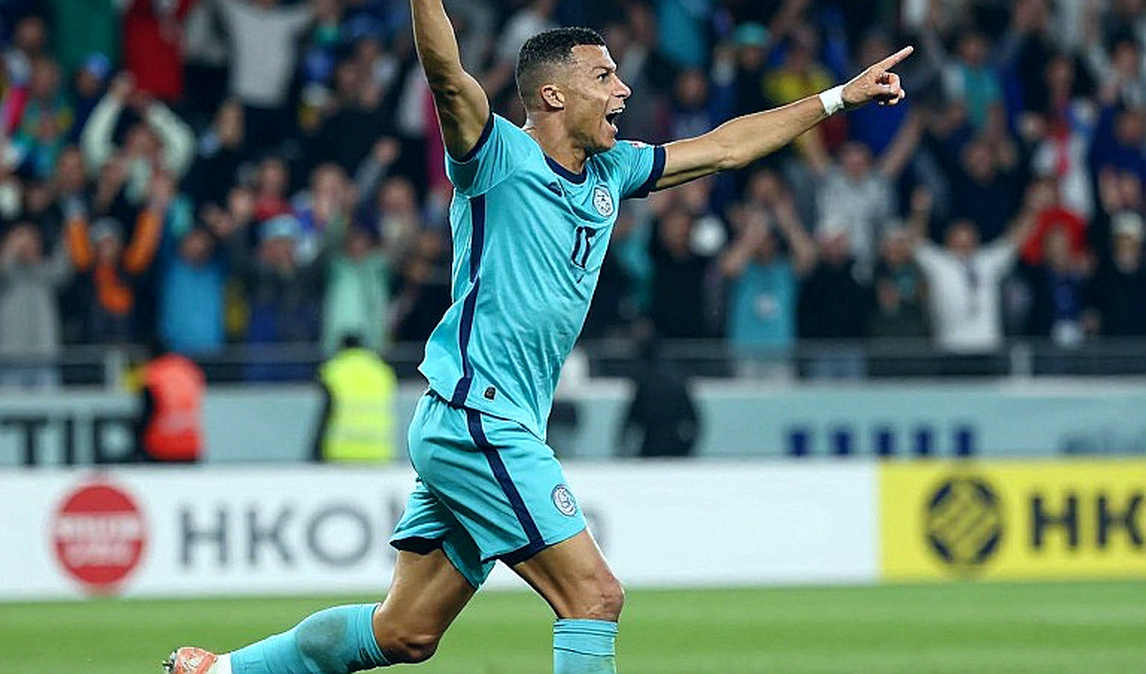
I recorded that moment in my notebook, dense with tactical symbols. Across more than fifty years of watching the ball roll, I have learned one thing: a young player's brightest moment usually arrives when the game is already decided. That is the easiest condition in which to shine, and also the easiest condition in which to fool the viewer. Having once argued against a legend on camera, I learned that the truth needs no permission — and a single moment needs no embellishment into a career.
Context
The match against Bolivia fell within the post-2026 World Cup friendly window, which Argentina entered as runners-up. After Bolivia came Burkina Faso (October 3, 2026), then Benin — the match the media billed as Lionel Messi's "emotional farewell." By placing Flores in exactly this window, Argentina's staff arranged a deliberate generational handover: the last man of the old era departs, the next one steps in.
Flores is 19 years old and has made 17 senior appearances for Boca Juniors since his debut on July 16, 2026. Scaloni referenced Franco Mastantuono as a model already applied previously, stressed the need to "protect" and "nurture" young players, and named Boca's two coaches — El Vasco Arruabarrena and El Mono Markic — as men who know how to handle the youngster.
This context matters more than the scoreline itself. A 4-0 friendly win over Bolivia says nothing about Argentina's true strength. It says only that Scaloni holds enough professional credit to experiment, and that he spends that credit with calculation. As a World Cup runner-up, he can send a 19-year-old on in the 80th minute without fear of challenge. That is a rare privilege, and a rare responsibility.
At 58, I typed line after line of Python to prove the young ones wrong — and I admit I was wrong about xG. For that reason, when I look at Flores, I do not want to repeat the mistake in reverse: judging a young player by inspiration rather than by a large enough data sample.
Core
Reading Flores's 10 minutes, the first thing to separate out is the substitution context. Scaloni withdrew a center-back to introduce a forward with his side 4-0 up. In tactical analysis, this is a "free-hit substitution" — it solves no on-field problem, merely exploiting a dead game to hand out an opportunity. Any technical read from this sample must be discounted for the very low difficulty. No defender presses fiercely when his team is four goals down, and no forward faces spatial pressure when the opponent has already let go.
Second: the original article provides no tactical system detail. No formation, no pressing scheme, no build-up pattern. The only quasi-tactical signal is Scaloni's instruction for the youngster to "produce what they do for their clubs." This is an identity-delegation approach: the player is expected to transplant club habits into the national team rather than be re-tooled. For a 19-year-old on his first cap, this reduces the risk of cognitive overload.
The one concrete technical event — the volley from Vega's cross — shows Flores can move off the ball to attack a cross. That is a positive signal, but a single observation. It does not establish a repeatable technical trait. In my work, one moment is never enough for a conclusion; what I need is a sample of many situations repeating across different match states.
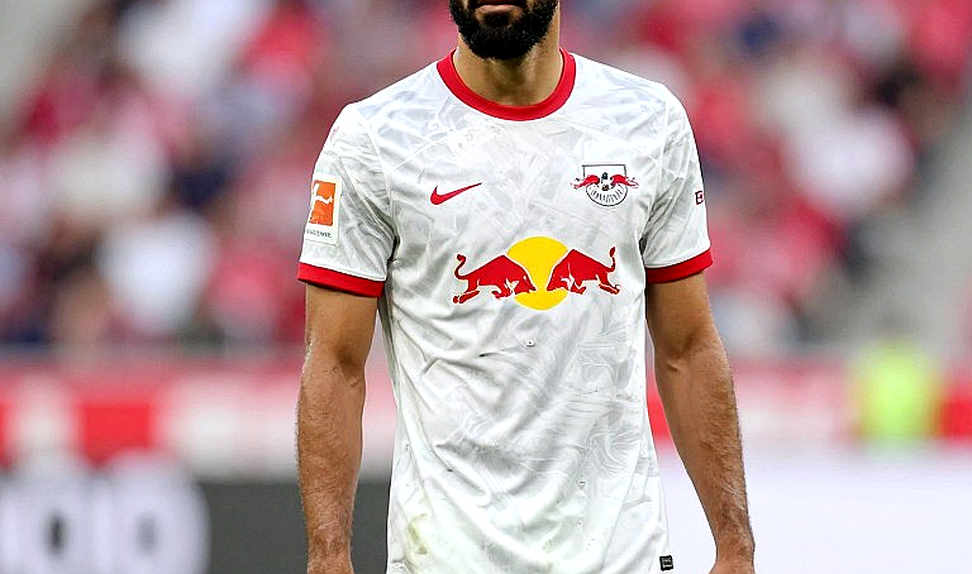
Under the method I have applied since 2026, any player assessment must cross-check expected goals (xG) against the actual tactical setup. In this match, no xG or PPDA figures were published for Flores's 10 minutes, so I can record only a single event: the volley. Missing data is not the player's fault, but it is the limit of every hasty conclusion.
More noteworthy is the market structure behind him. Flores sits in the appreciation phase of the age-value curve — his market value is almost entirely prospective, not yet realized. At 19 with 17 senior outings, he is an asset priced on expectation. A senior national-team cap is a documented value catalyst: it triggers appearance-based add-ons in many contracts and materially raises European scouts' attention.
Boca Juniors, in the global football food chain, occupies the star-exporter role. Every time one of their youngsters earns a cap, the academy's credibility is reinforced in the eyes of European buyers. Transfers are not a jigsaw puzzle; they are a game of greed and calculation — and in that game, a senior cap is merchandise repackaged.
Let me state this with a verifiable fact: 17 senior appearances in roughly two and a half months, from July 16 to early October 2026. In scheduling terms, that is an unusually congested density. Such heavy minutes for a 19-year-old are a load warning, whatever the talent. Fixture density is the single biggest cause of injury; no medical staff can save a player asked to feature twice a week during a phase of physical development.
That is why Scaloni naming Arruabarrena and Markic is not a diplomatic detail. It is a signal of club–national-team coordination on load management — rare and worth noting. It also shows Argentina already has an institutionalized young-talent protocol, with Mastantuono as precedent.
Contrarian
But here is where I must question the popular reading itself. The media calls Flores a "sensation," a "rapid rise," and places him beside Mastantuono as the next model. Ten minutes against a team already four goals down cannot underpin that claim. The historical fulfillment rate of the "next one" label is very low, and I have seen too many names exalted only to be turned on by the very machine that created them.
The biggest worry here is expectation inflation. An article calling a 19-year-old a "sensation" after 10 minutes in a no-pressure state is precisely the pattern that generates future backlashes. When expectations go unmet, the same media machinery that exalted him will return to judge him. Scaloni clearly understands this: he repeatedly uses words like "protect," "nurture," and "keep our calm," warning that this level cannot be expected every match. That is a deliberate expectation-dampening strategy.
Note also that the original piece carries a self-promotional footer, urging readers to add Goal.com as a preferred source. When an article both labels a youngster a "sensation" and solicits engagement, headline intensity tends to exceed the informational substance inside. This is what I always remind my readers: separate the alluring part from the factual part.
A data question is also worth raising. The article states Argentina were 2026 World Cup runners-up, Flores debuted for Boca on July 16, 2026, and the friendlies took place in early October 2026. This chain implies around 17 senior appearances in under three months. That is plausible only under an extremely congested calendar and should be cross-checked against a second source before being used as a basis.
Takeaway
What I will track over the next two matches — against Burkina Faso and Benin — is not whether Flores scores, but how many minutes he gets, in what match state, and whether Scaloni keeps the same protective tone as expectations rise. If a 19-year-old only shines when his side already leads by four, that is information about context, not ability. But if he stays composed when the score is level, then there will be something to write. All my life I watched the ball roll, yet only after stepping away did I truly understand it — and what I understood is this: never pass a verdict on a young player on ten minutes alone.